

In modern kitchens, fruit storage baskets are not just simple storage containers, but also crucial storage spaces affecting fruit preservation. Many families habitually put different types of fruit together in the fruit storage basket, believing that as long as there is good ventilation, there will be no problem.
However, different fruits have differences in gas release, ripening speed, and humidity requirements. Improper mixing can actually accelerate spoilage and deterioration.
So, which fruits should not be stored together in a fruit storage basket? Why do fruits in a fruit storage basket need to be scientifically categorized?
This article will systematically analyze which fruits should not be mixed and how to properly use a fruit storage basket to improve storage efficiency.
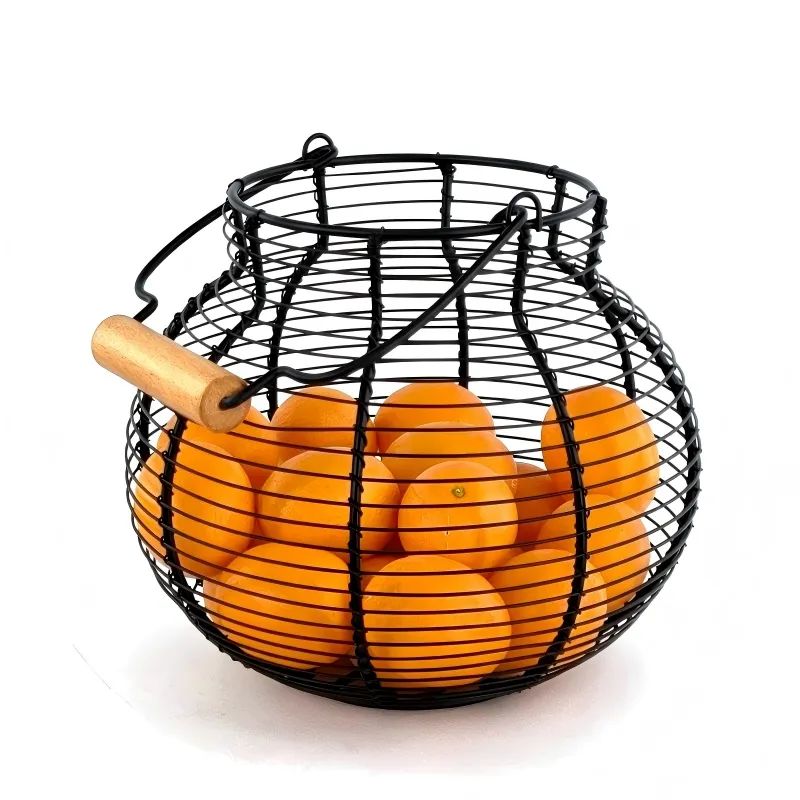
Why shouldn't fruits be randomly mixed in a fruit storage basket?
Fruits are not "static" foods; they continue to respire after being picked. During this process, fruit will:
• Release water
• Produce ethylene gas
• Consume internal nutrients
• Gradually ripen or age
The advantage of fruit storage baskets is ventilation, but if different types of fruit are stored together in a fruit storage basket, the ethylene gas released by some fruits will stimulate other fruits to ripen faster, even leading to overripeness and rot.
Therefore, the key to using fruit storage baskets scientifically is to store them separately, not simply pile them up.
Which high-ethylene fruits are not suitable to be placed in a fruit storage basket with other fruits?
Ethylene is a natural plant hormone that promotes fruit ripening. The following fruits are high-ethylene-releasing fruits:
• Apples
• Bananas
• Pears
• Mangoes
• Avocados
• Tomatoes
If these fruits are placed in the same fruit storage basket and mixed with low-ethylene-sensitive fruits, they will accelerate the ripening of the others.
For example:
• Apples release ethylene, which will cause bananas to turn black faster.
• Bananas release ethylene, which will cause pears to soften quickly.
Therefore, high-ethylene fruits should be stored separately in fruit storage baskets whenever possible.
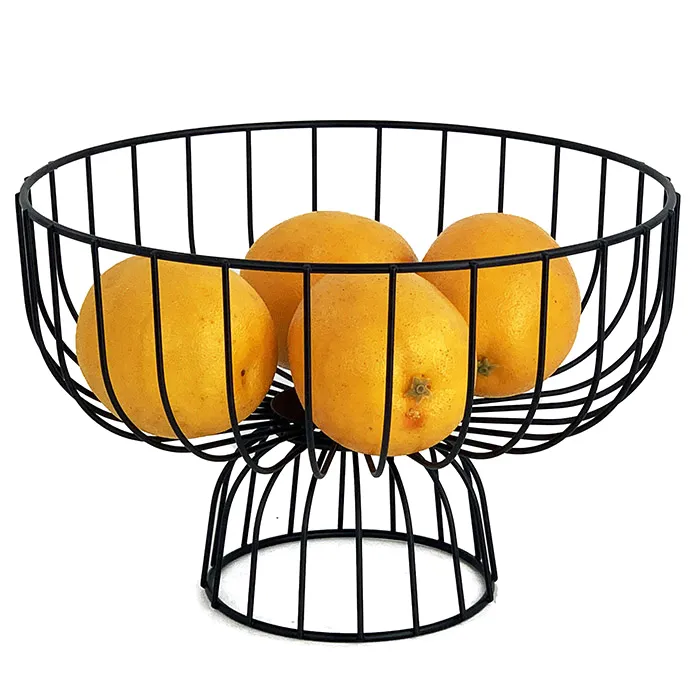
Which fruits are particularly sensitive to ethylene and should not be stored together?
Some fruits are extremely sensitive to ethylene gas. If placed in a kitchen fruit basket with fruits high in ethylene, a significant decline in quality will occur.
Ethylene-sensitive fruits include:
• Strawberries
• Blueberries
• Grapes
• Citrus fruits
• Cherries
• Pineapples
If these fruits are stored in a kitchen fruit basket with apples or bananas, they will:
• Soften
• Lose flavor
• Spoil more easily
Therefore, the effects of ethylene must be considered when using kitchen fruit baskets.
Can fruits with significantly different moisture contents be placed in the same kitchen fruit basket?
Different fruits have significantly different moisture contents.
High-moisture fruits:
• Watermelon
• Cantaloupe
• Strawberries
Medium-low moisture fruits:
• Apples
• Pears
• Citrus fruits
If high-moisture fruits are stored with low-moisture fruits in the same kitchen fruit basket, the moisture released by the high-moisture fruits may increase the humidity inside the basket.
Increased humidity can lead to:
• Condensation on apple surfaces
• Mold growth in citrus fruits
• Bacterial growth
Therefore, high-humidity fruits should not be mixed with dry-tolerant fruits in fruit storage baskets.
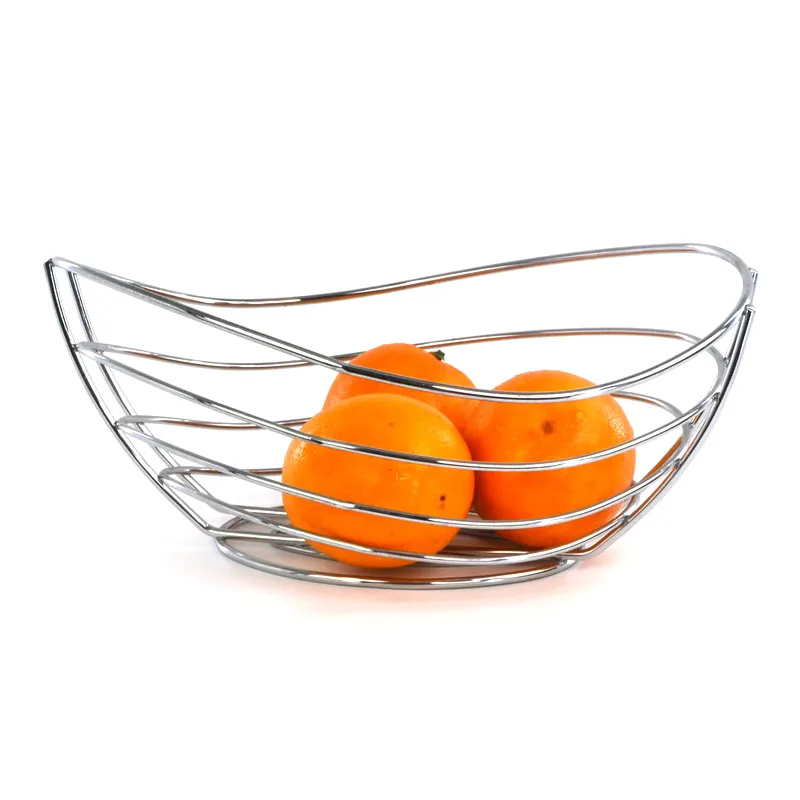
Can fruits at different stages of ripeness be placed together in a fruit storage basket?
Ripple is a crucial factor affecting storage effectiveness.
Unripe fruits will:
• Continuously release ethylene
• Accelerate their own ripening
Overripe fruits will:
• Release more gas
• Produce more moisture
If fruits with significantly different stages of ripeness are mixed in a fruit storage basket, it will disrupt the ripening process.
For example:
• Ripe bananas will accelerate the ripening of unripe apples
• Overripe pears will increase humidity in the basket
Therefore, fruit storage baskets should be arranged according to their ripeness stage.
Are thick-skinned fruits with peels and soft-skinned fruits suitable for mixing?
Fruit peels of different thicknesses offer significantly different levels of protection.
Thick-skinned fruits:
• Citrus fruits
• Pineapple
• Cantaloupe
Soft-skinned fruits:
• Strawberries
• Peaches
• Plums
When mixed in a fruit storage basket, thick-skinned fruits are more resistant to pressure, but soft-skinned fruits are easily damaged by compression.
Although fruit storage baskets are well-ventilated, stacking them in a limited space can cause soft-skinned fruits to break.
Therefore, soft-skinned fruits should be stored in separate layers or individually in the fruit storage basket.
Which fruits should not be placed with bananas in the kitchen fruit basket?
Bananas are a typical example of high-ethylene-releasing fruits.
Fruits that are not recommended to be placed with bananas in the kitchen fruit basket include:
• Strawberries
• Blueberries
• Grapes
• Citrus fruits
• Watermelon
Bananas release a large amount of ethylene during ripening, which accelerates the spoilage of these fruits.
Bananas are best hung or placed separately in the kitchen fruit basket.
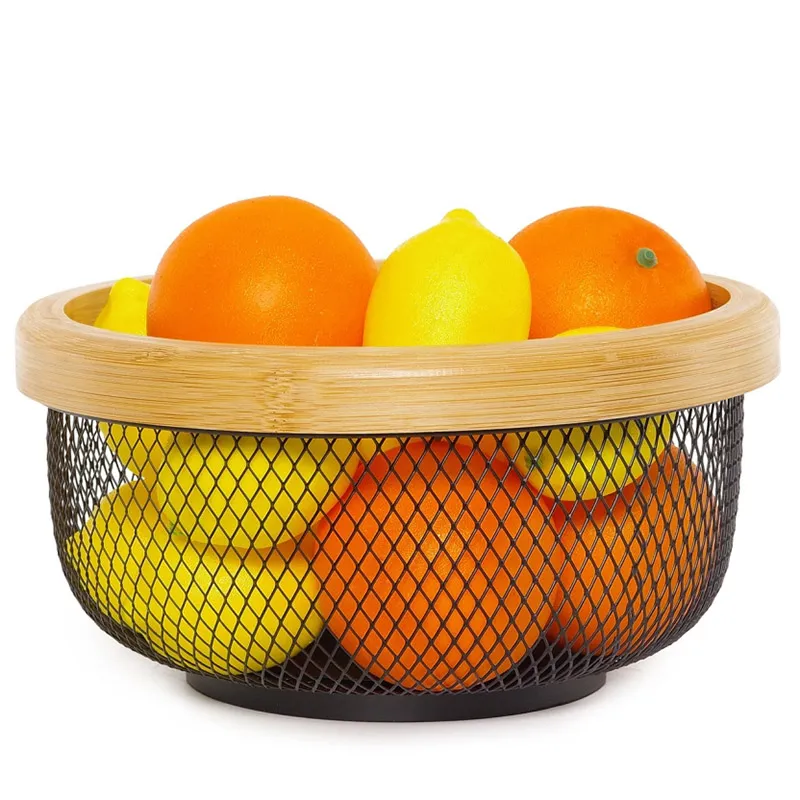
Which fruits should not be placed with apples in the fruit storage basket?
Apples are also high-ethylene-releasing fruits.
Fruits not recommended for storage with apples include:
• Pears (will soften faster)
• Mangoes (ripen too quickly)
• Persimmons (soften easily)
• Strawberries (perish more easily)
If mixed storage is unavoidable in a kitchen fruit basket, maintain spacing or use a partitioned design.
How should kitchen fruit baskets be scientifically categorized and arranged?
To avoid problems with unsuitable mixed storage, kitchen fruit baskets can be used in the following ways:
1. High-ethylene fruits in a separate layer
2. Ethylene-sensitive fruits in a separate layer
3. Soft-skinned fruits on top
4. Thick-skinned fruits on the bottom
5. Regularly check ripeness
Through layering and categorization, kitchen fruit baskets can achieve better storage results.
Why can proper use of fruit storage baskets extend the shelf life of fruit?
Fruit storage baskets themselves have ventilation advantages, but incorrect mixing can weaken these advantages.
Proper categorization can:
• Control ethylene concentration
• Balance humidity
• Reduce compression
• Lower the risk of spoilage
Therefore, a kitchen fruit basket is not just a simple container, but a storage space that requires scientific management.
Which fruits should not be stored together in a fruit storage basket?
The following fruits are not suitable for mixing in the same fruit storage basket:
✔ High-ethylene fruits and ethylene-sensitive fruits
✔ High-moisture fruits and low-moisture fruits
✔ Fruits with significantly different ripeness levels
✔ Soft-skinned fruits and heavy, thick-skinned fruits
The fruit storage basket itself does not cause fruit spoilage, but improper mixing will affect preservation.
The correct use of a fruit storage basket should follow the principles of categorization, layering, humidity control, and ventilation.
What is your quality control process?
Our Factory follows strict ISO9001 quality management procedures throughout raw material Purchasing, production, assembly, and final inspection. Every Bread Box, Utensil Holder, Wine Rack, and Kitchen Storage Rack undergoes detailed checks for structural stability, surface finishing, and packaging safety. As a certified China Manufacturer with ISO14001 and SA8000 compliance, we ensure environmentally responsible and ethical production standards. Our AEO Advanced Certification further guarantees secure export procedures.