

In kitchen organization design, storage racks are key tools for maximizing space utilization and operational efficiency. However, during the actual purchasing process, many people face a core dilemma: Which is the better choice—a floor-standing kitchen storage rack or a wall-mounted one?
These two types of storage racks differ significantly in terms of structural form, load-bearing capacity, space requirements, installation methods, and usage scenarios. An improper choice can not only compromise the user experience but also reduce the overall efficiency of the kitchen.
Centered on the core subject of "kitchen storage racks," this article will provide an in-depth analysis across various professional dimensions—including structural principles, spatial adaptability, load-bearing capacity, moisture resistance, safety, and user convenience—to help you make an informed decision regarding which type of rack is best suited for your specific kitchen environment.
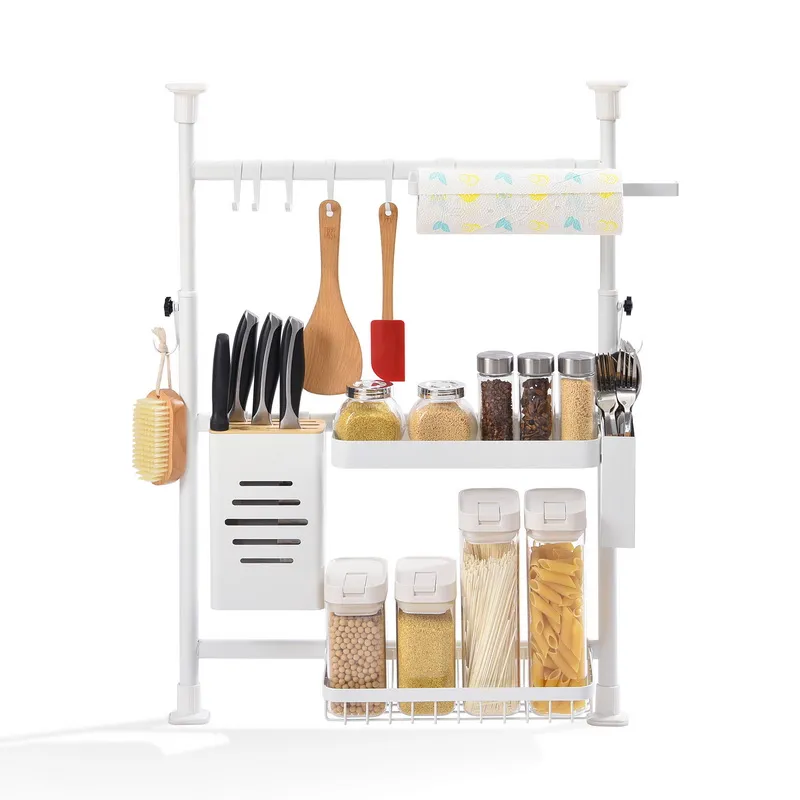
What Are the Fundamental Differences Between Floor-Standing and Wall-Mounted Kitchen Storage Racks?
Before analyzing which type of rack is superior, it is essential to first clarify the fundamental differences between the two.
Floor-Standing Kitchen Storage Racks
•Placed directly on the floor
•Typically feature a multi-tiered structure
•Can be either movable or stationary
•Do not rely on the wall for structural support
Wall-Mounted Kitchen Storage Racks
•Installed directly onto the wall surface
•Utilize vertical wall space
•Typically require drilling or adhesive mounting
•Rely on the wall structure for support
The core differences between the two lie in their "source of structural support" and their "method of space utilization."
Which Type of Kitchen Storage Rack Is More Space-Saving?
This is a primary concern for many users with small kitchens.
1. The Spatial Advantages of Wall-Mounted Kitchen Storage Racks
By utilizing wall space, wall-mounted racks can:
•Free up countertop space
•Minimize floor footprint
•Maximize vertical space utilization
They are particularly well-suited for:
•Small-sized kitchens
•Spaces with limited countertop surface area
2. The Spatial Characteristics of Floor-Standing Kitchen Storage Racks
Floor-standing racks require floor space, but they offer distinct advantages:
•Greater storage capacity
•The ability to consolidate and store a large volume of items in one place
If your kitchen is spacious, a floor-standing storage rack can be an equally effective solution for efficient organization.
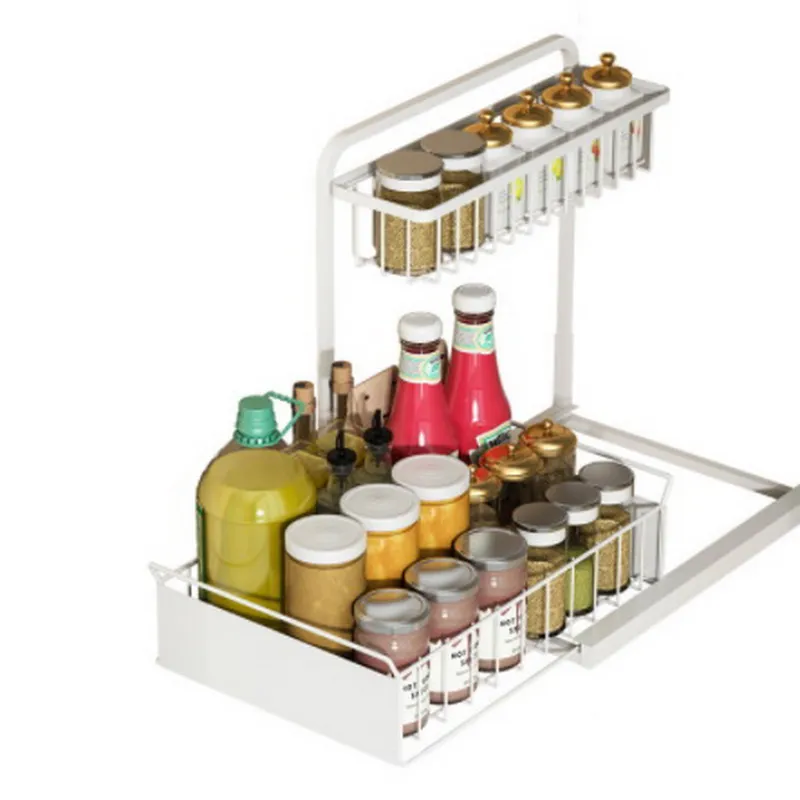
Do Floor-Standing Kitchen Storage Racks Offer Greater Load-Bearing Capacity?
From the perspective of structural mechanics, the answer is a resounding yes.
1. Floor-standing Kitchen Storage Rack
•Load-bearing capacity is supported directly by the floor
•Stable structure
•Capable of holding heavy items
Suitable for storing:
•Microwaves
•Ovens
•Rice cookers
•Large cookware
2. Wall-mounted Kitchen Storage Rack
•Load-bearing capacity relies on the wall structure
•Performance is heavily influenced by the installation method
Typically suitable for:
•Spice jars
•Utensils
•Lightweight kitchen accessories
Therefore, if high load-bearing capacity is required, a floor-standing kitchen storage rack offers a distinct advantage.
Is a Wall-mounted Kitchen Storage Rack More Convenient to Access?
In terms of operational convenience, a wall-mounted kitchen storage rack offers certain advantages:
•Height can be adjusted to suit user habits
•Accessing items is more ergonomic
•Items are clearly visible at a glance
Especially during the cooking process, a wall-mounted rack minimizes the need to bend down or move around unnecessarily.
In contrast, the lower shelves of a floor-standing rack require bending down to retrieve items, making them slightly less convenient to access.
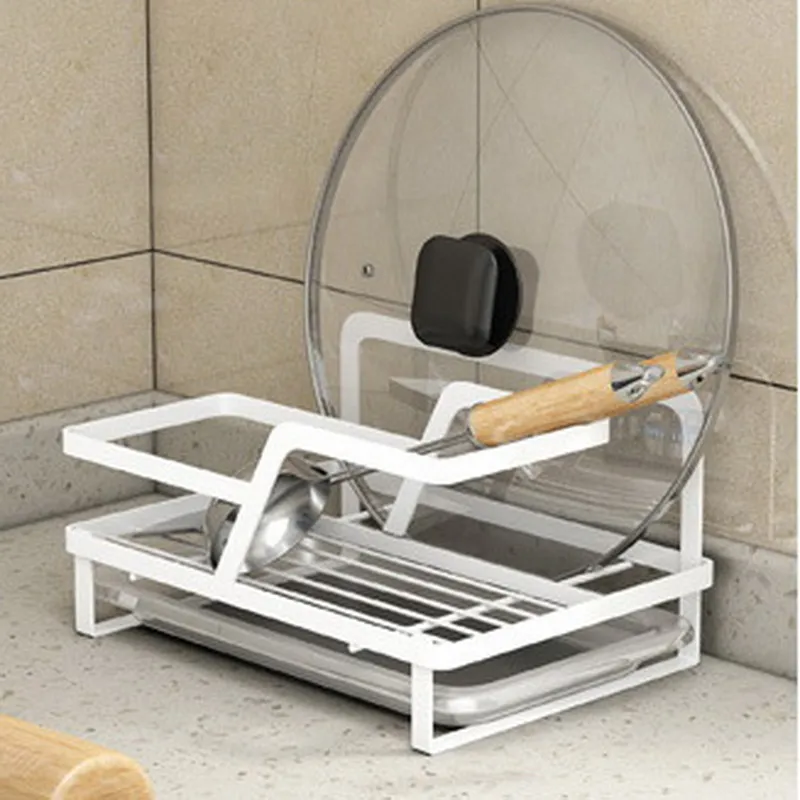
Which Type of Kitchen Storage Rack Is Safer?
Safety depends on several factors:
1. Floor-standing Kitchen Storage Rack
•Stable center of gravity
•Does not rely on the wall structure
•No risk of detachment
However, if placed on an uneven surface or if the structure is excessively tall, there may be a risk of tipping over.
2. Wall-mounted Kitchen Storage Rack
•Offers good stability if installed securely
•Poses a risk of falling if installed improperly
Safety is particularly compromised in situations involving:
•Loose or unstable wall surfaces
•Aging adhesive-based mounting systems
Therefore, safety ultimately depends on the quality of the installation and how the rack is used.
Which Type of Kitchen Storage Rack Is Better Suited for Humid Environments?
Kitchen environments typically have higher humidity levels.
1. Floor-standing Kitchen Storage Rack
•Located close to the floor
•May be exposed to moisture and steam
•Requires a moisture-resistant design
2. Wall-mounted Kitchen Storage Rack
•Positioned away from floor-level water sources
•Offers better ventilation
•Less susceptible to moisture damage
In areas near the kitchen sink, a wall-mounted storage rack offers a distinct advantage in terms of moisture resistance.
Is a Floor-standing Kitchen Storage Rack More Flexible?
Floor-standing kitchen storage racks typically feature:
•A movable design
•Adjustable shelf heights
•Reconfigurable layouts
They are ideal for users who frequently rearrange their kitchen layout.
Once installed, wall-mounted kitchen storage racks remain in a relatively fixed position, making subsequent adjustments more difficult and costly.
Are wall-mounted kitchen storage racks suitable for all types of walls?
Not all walls are suitable for installing wall-mounted kitchen storage racks.
Factors to consider include:
•Wall material (concrete, brick, drywall)
•Load-bearing capacity
•Installation method
For walls with limited load-bearing capacity, installing heavy-duty wall-mounted storage racks is not recommended.
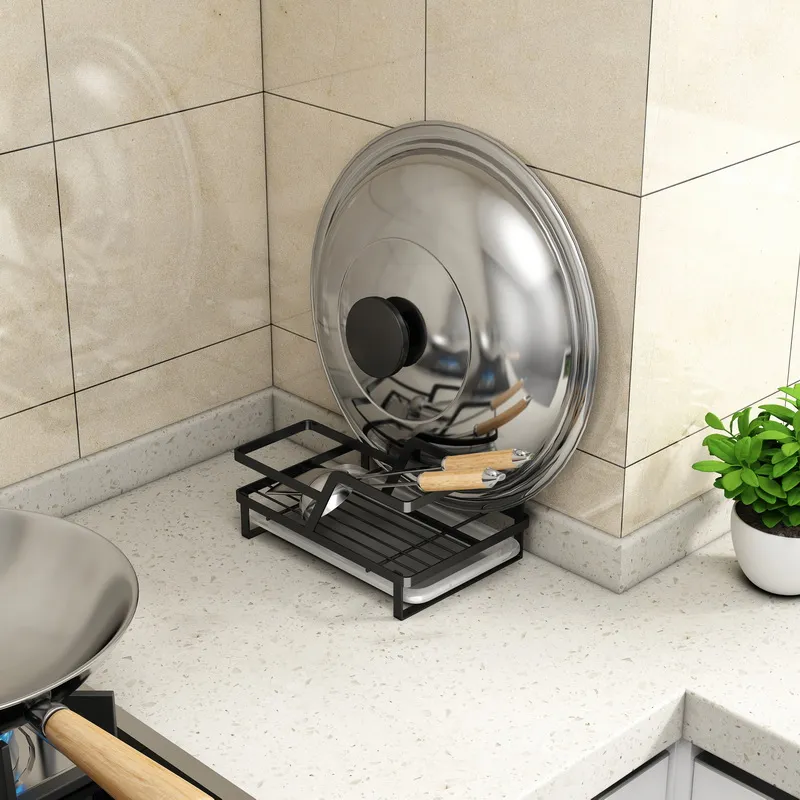
Which type of kitchen storage rack is easier to clean?
1. Floor-standing kitchen storage racks
•Prone to dust accumulation
•Cleaning the area beneath the unit can be cumbersome
2. Wall-mounted kitchen storage racks
•Do not make contact with the floor
•Easier to clean
Therefore, from a hygiene perspective, wall-mounted kitchen storage racks offer distinct advantages.
Which is the right choice for you: floor-standing or wall-mounted kitchen storage racks?
You can determine the best fit by considering the following questions:
1.Do you need to store heavy appliances?
2.Is your kitchen space limited?
3.Do your walls have sufficient load-bearing capacity?
4.Do you require the flexibility to move the unit?
If your priorities lean toward "heavy-duty load-bearing" and "flexibility," choose a floor-standing kitchen storage rack.
If your priorities lean toward "space-saving" and "operational convenience," choose a wall-mounted kitchen storage rack.
Which is better: floor-standing or wall-mounted kitchen storage racks?
From a professional standpoint, there is no single "better" kitchen storage rack—only the option that is best suited to your specific needs.
✔ If you require high load-bearing capacity and flexible mobility → Choose a floor-standing kitchen storage rack.
✔ If space is limited and you prioritize a tidy, uncluttered look → Choose a wall-mounted kitchen storage rack.
In practice, many kitchens utilize a combination of both types of storage racks:
•Floor-standing units for storing large items
•Wall-mounted units for frequently used daily essentials
This combined approach helps maximize kitchen efficiency.
How do you respond to changing market trends?
We continuously monitor international home organization trends to adjust product development and Supply planning. As a proactive China Manufacturer, our Company introduces updated finishes, improved structures, and multi-functional designs for Fruit Storage Baskets, Dish Racks, Mug Trees, and Bathroom Racks. By analyzing Retail Sales data and distributor feedback, we refine our offerings to meet consumer demand.